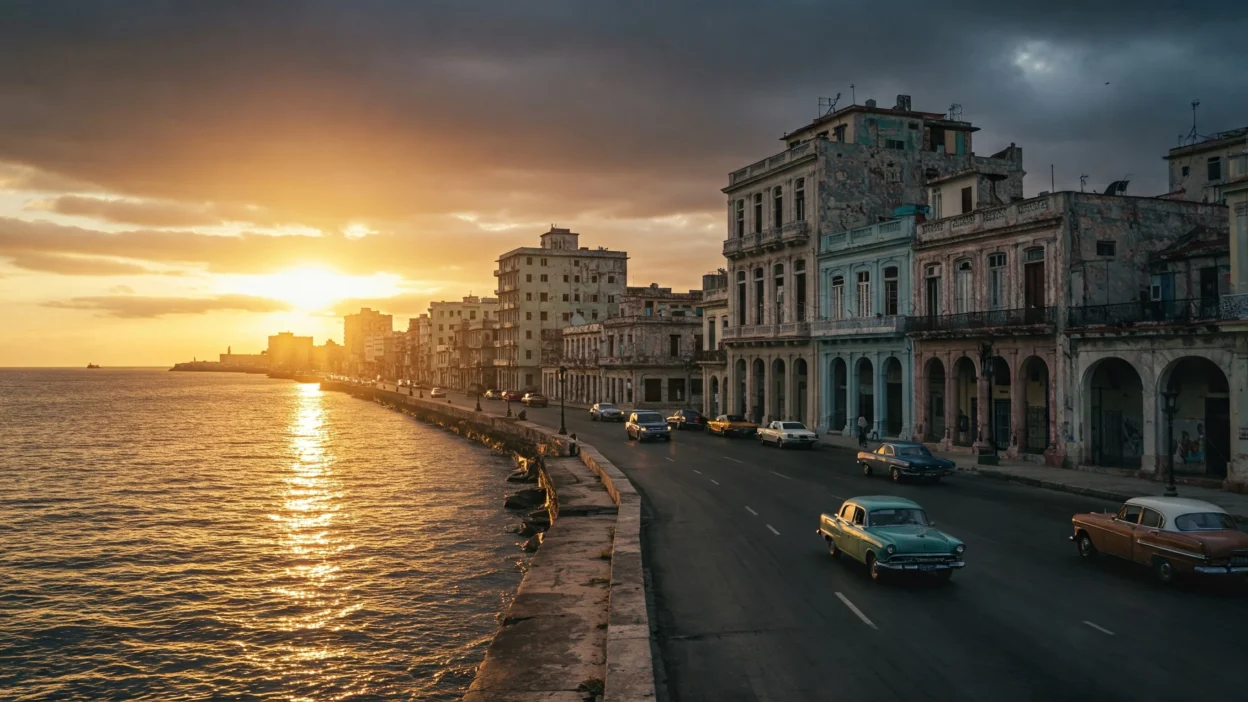
The sun dipped low over Havana, casting long shadows across the crumbling colonial buildings that lined the Malecón. The air was thick with salt, diesel fumes, and the faint promise of rain. Havana had always been a city of contrasts—luxury and poverty, history and decay, revolution and corruption—and now, as the vibrant streets pulsed with the noise of evening traffic, it seemed that all of its secrets were on the verge of spilling out into the open.
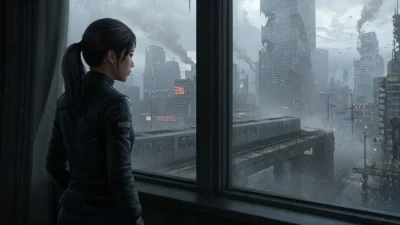
Carmen Vázquez stood at the window of her apartment on the sixth floor of a building overlooking the ocean. Her fingers gripped the worn-out sill as she watched the scene unfold below—tourists lounging along the promenade, children playing with makeshift toys, old men in the cafés discussing baseball and politics. Everything looked peaceful, almost idyllic, but Carmen knew better. Behind the smiles, the laughter, and the colorful streets, something dangerous was brewing beneath the surface.
It had been a year since she had left her work at the Ministry of Culture, a small rebellion against the rigid control of the regime she had once believed in. A year since she had started running a small but thriving underground art gallery that showcased works banned by the government. But now, even her beloved gallery felt suffocating. The whispers she had been hearing for weeks—about corruption, betrayal, and power—felt too close to ignore. They were closing in, and Carmen could feel it.
She turned away from the window, her gaze landing on the small wooden desk cluttered with files, maps, and personal notes. Among them was a letter, sealed with the emblem of the Cuban government. She hadn’t opened it yet, though she knew what it contained—an invitation, or rather, an ultimatum.
Her fingers hovered over the letter, torn between her fear of what the contents would mean and her curiosity about the man who had sent it. The signature at the bottom of the page was unmistakable: Miguel Ortega, an old contact from her time at the Ministry.
Miguel had been a rising star in the government, someone Carmen had once trusted implicitly. But that had been before the whispers began—whispers that suggested he had become entangled with some very dangerous people. Carmen’s gut twisted as she thought about it. Had he truly betrayed her, or was he trying to warn her about something much darker?
A knock on the door pulled her from her thoughts.
Miguel’s face, as familiar as it was unsettling, greeted her when she opened the door. He looked older than she remembered—tired, worn, but his eyes still burned with that same intensity that had made him one of the most charismatic figures in Havana’s political circles.
“I thought you’d be expecting me,” he said, his voice low but urgent.
Carmen stepped aside, allowing him to enter. As soon as he crossed the threshold, he took off his coat and threw it over the back of a chair. His presence filled the room, as it always had, with an unspoken tension. She had never been able to tell if it was because of his ambition, his charm, or something else entirely.
“Carmen, you’re still playing with fire,” he said, a rueful smile tugging at the corner of his mouth. “I warned you. I always warned you.”
She crossed her arms, meeting his gaze with a mixture of frustration and defiance. “I’m not the one who’s playing games, Miguel. You’ve become a different man since we last spoke.”
Miguel’s smile faded. He reached into his pocket and pulled out a small, crumpled envelope, placing it on the table. “I didn’t come here to argue. This is what’s left of a project we started all those years ago. The one we thought would change everything.”
Carmen’s heart skipped a beat as she glanced at the envelope. It was familiar, something she had thought was long gone. The contents of that project had been buried under layers of bureaucracy and secrecy, but Carmen had always believed in its power. It was supposed to be the key to unlocking a new Cuba—one that was free from the grip of corruption and control.
“You’re telling me that this still matters?” she asked, her voice barely above a whisper.
Miguel leaned forward, his hands clasped together. “You have no idea what’s coming. The revolution we fought for, the one we thought was for the people, has become something unrecognizable. The regime is about to collapse, but not in the way we hoped. There are people—powerful people—who want to turn Cuba into something far worse. They want to control the island, not liberate it.”
Carmen felt a cold shiver run down her spine. She had suspected it for months, but hearing Miguel confirm it made the weight of the truth sink in like a leaden anchor.
“And you want me to help you stop it?” she asked, her voice laced with disbelief.
Miguel’s eyes softened, but there was no time for sentiment. “I need you, Carmen. You know this city, its people, better than anyone. Together, we can do something that no one else can.”
Over the next few days, Carmen and Miguel worked together in secret, carefully unraveling the network of corruption that had been slowly choking Cuba’s future. The clues were hidden in plain sight—buried in government contracts, in business dealings, in the layers of bureaucracy that had long since lost their purpose. They uncovered evidence of high-ranking officials funneling money to foreign powers, of secret alliances with criminal organizations, of a quiet war being waged for control of Havana and the island’s future.
The more Carmen learned, the more she realized just how deeply the rot ran. Her loyalty to the revolution had blinded her to the truth for so long. But now, with each document they uncovered, each conversation they overheard, it became clear: the very people who had promised to protect Cuba’s future were the ones who were selling it to the highest bidder.
There were moments when she wanted to give up—to walk away from it all and return to her gallery, where the art was simple and the stakes felt safer. But then she would think of the people—of the mothers and fathers in the streets, the children playing in the dust, the people who had trusted the revolution. They had all been betrayed, just as she had.
“I never thought it would come to this,” she said one night, as she sat across from Miguel in her apartment. The room was dimly lit, the sound of the city muffled by the thick walls. “We fought for something real, something worth believing in. And now… now I don’t know who the enemy is.”
Miguel’s gaze was steady, his voice soft. “The enemy was never just one person or one party. It’s the system, Carmen. The system we built together. It corrupted everyone, even us.”
He was right, but it didn’t make it easier to accept.
The final confrontation came a week later, as the sun set over the bay. Carmen and Miguel had gathered what little they could—documents, recordings, testimonies—and were preparing to leak everything to the people. But as they made their way to the drop-off point, they were intercepted by a group of government agents. The betrayal had come from within, and now, Carmen had to decide whether to flee or face the consequences of her involvement.
“Miguel,” Carmen said, her voice a mixture of fear and resolve, “what do we do now?”
Miguel’s face was grim. “We finish it, Carmen. We expose them all. We make sure they can’t hide anymore.”
The final decision was made in the quiet of the Cuban night, under the gaze of the stars. They knew what was at stake—their lives, their futures, and the future of a country that had once meant something to them.
As the agents closed in, Miguel handed Carmen the final file.
“Make it count,” he whispered, just before the world erupted into chaos.
End.